Sunday, September 9, 2012

Librarians as Curators?

Having moved from the museum world a decade ago, with a grad degree in art history and certification from a curatorial studies program, my ears perked up when I heard the term "curate" being used at a professional development workshop about a year ago to describe one of the aspects of our work as librarians.  Wow," I thought, "I've actually been curating all these years!"  The term "curation" has been used in the library and technology world to characterize the activity of the selection and organization of online apps, as well as physical collection development (what we choose to buy for our library and how to arrange it).  Well, it seems that the term "curator" is no longer sacrosanct, and this has irked many who want to preserve its conventional meaning, i.e., a professional who is in charge of a museum or exhibit.

Apparently, the term was first bandied about in the fashion blogosphere.  It could be applied to selecting merchandise for a boutique or arranging the shop windows.  I dug up this amusing rant from 2011 on the misuse and abuse of the term in  An Open Letter to Everyone Using the Word 'Curate' Incorrectly on the Internet.


A "real" curator, Anne Pontegnie, from the Brussels Museum 
Courtesy Wiki Commons

Friday, August 31, 2012

Organizing Conference Notes

My friend and fellow library media specialist Debra Truss recently queried the NYC School Librarians List (NYCSLIST) the following:

I have now had the pleasure of working as a librarian for five years and during those five years have attended many wonderful PD [professional development] events for librarians and teachers.  I have learned many valuable skills and gleaned inspiring ideas from colleagues at these events.  All of these are recorded as notes, or on handouts, in folders, etc.  They are starting to really pile up, and I am sure I will only be collecting more as time goes on.  I don't want valuable ideas to be lost in a pile!

So I am wondering, how do all of you organize your PD notes and materials so that you can use them for reference effectively?

This was my reply: 

I have my notes from various workshops and conferences (now mounting up!) in a variety of formats:  "old-school" paper notes shoved into manila folders, or notes filling up the nifty little journals that are handed out at conferences.  Occasionally I peruse these and flag with Post-its or mark up in highlighter anything that seems pertinent at the moment.  I've also scanned many of these into PDFs and saved in Dropbox, where I've created folders (time-consuming).   Then there are the notes that I've typed up in Word or Google Docs (now Drive).  Relevant websites that are mentioned during talks I bookmark in Diigo (useful because you can tag them); and--more recently--apps on the iPad like Penultimate and my current favorite--Notability, which has an audio record feature and ability to organize into folders (but, alas, no tags).

How do you organize your notes?  

Wednesday, August 29, 2012

Century of the Child @ MoMA

Ellen Key
Century of the Child: Growing by Design, 1900–2000 at  the Museum of Modern Art surveys 20th century design for (and by) children.  
The exhibition takes its name from an eponymous book by Swedish feminist writer and suffragist Ellen Key, who was an early advocate of a child-centered approach to education and parenting.

The show looks at Frederic Froebel's philosophy of the kindergarten in the context of the development of modernism, where "great value was placed on the child's enjoyment of the creative process and intuitive investigation of materials.  The new pedagogy prized authentic expression, the inspiration of the natural world, and the creative potential of every individual, every child."  (from exhibition wall text).  Key believed that homework should be moved back to the school. As far as possible, teaching should be aimed at the pupils, their search for knowledge and in shaping their own opinions. "Our age cries for personality, but it will ask in vain, until we allow them to have their own will, think their own thoughts, work out their own knowledge, form their own judgements; or, to put the matter briefly, until we cease to suppress the raw material of personality in schools, vainly hoping later on in life to revive it again."  In our current educational policy, where play has been sacrificed for "college readiness" the exhibition begs the question: Is the century of the child a relic of times gone?

Wednesday, August 22, 2012

America's Largest Cookbook Collection

Fun Food Factory by Nanette Newman
c. 1976
   
 Date bait,the younger set's picture cookbook
    Robert H. Loeb, 1962

Weird--wouldn't a pictorial recipe be
designed for the pre-dating set?  
Yesterday I had the privilege of taking a trip through the stacks of the Food & Cookery Collection at Fales Library at NYU.   The collection has approximately 50,000 volumes, 26,000 of which have been catalogued.  I had the privilege of rummaging through the stacks of children's cookbooks on a tour led by the most gracious librarian Marvin Taylor, who oversees this awesome resource and is himself an incredible resource for food and cookery literature.

I got a sneak peek of 101 Classic Cookbooks, edited by the Fales Library, with Mr. Taylor at its helm.  The editors compiled cookbook favorites by such notables as Florence Fabricant, Judith Jones (Julia Child's editor), and Alice Waters.  Taylor launches his introduction with a description of his childhood food memory of onions sauteeing in butter in his grandmother's kitchen.  I can't wait to get my hands on this book!
Coming in October 2012


Saturday, July 28, 2012

Focus on Immigration and Food

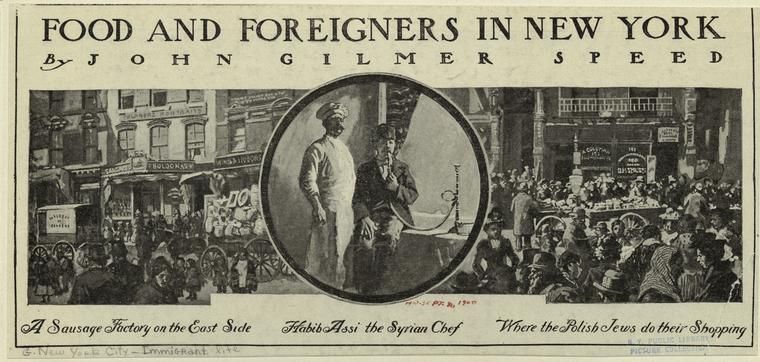
I'm thrilled to have been selected, along with 24 other educators, to participate in the three-week seminar "Recipe for America: New York, Immigration and American Identity through Food Culture. " The Institute is organized by The New York Public Library and funded through the National Endowment for the Humanities.  We will be looking at the lives of 19th and 20th century immigrants through lectures, readings, pictures, menus, and other resources in the NYPL's collection.  I plan to share resources and ideas with my teacher colleagues teaching immigration.
Sausage factory on the east side ; Habib Assi the Syrian chef ; Where the Polish Jews do their shopping. (1900), NYPL 


Friday, July 27, 2012

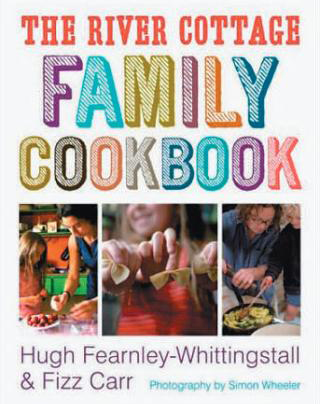
What is a “Family” Cookbook?


I have been trying to answer this question.  As the keeper of the CCD cooking collection for New York City, I am in charge of acquiring and maintaining the City’s premiere collection of children’s cookbooks.  Each year, we receive x dollars to augment the collection, to keep it current and growing.  I am considering the genre of so-called “family cookbooks” to round out the collection (the collection also contains literature related to growing food and nutrition).  The fact that this year we will receive an increase in funding for this collection.  That combined with the fact that the production of children’s cookbooks is relatively limited, I am considering what to fill my shopping cart with, while keeping our collection focused and useful for our community.  My own personal children have always happily partook of the food that was prepared for them, be it an improvised dish or prepared from a standard cookbook for our entire family or guests. Why a family cookbook? Our library serves grades prekindergarten through fifth, so our cooking collection is really designed for the students and their families.  So, the question is, what defines a “family” cookbook?  Is it portion size?  Is it “kid-friendly” food (whatever that means)?